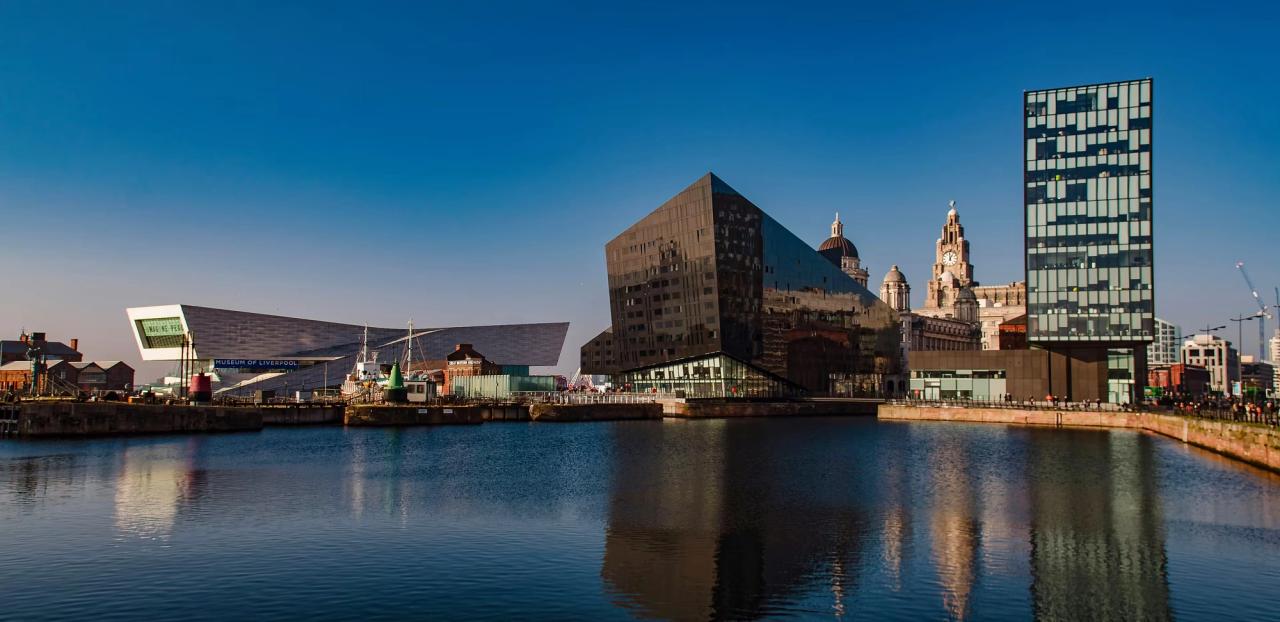

Liverpool is a port city on the River Mersey in North West England, home to around 500,000 people in the city proper and nearly 1.5 million across the wider metro area. Famous worldwide for The Beatles, its football clubs, and a fiercely proud local identity, Liverpool has undergone a dramatic renaissance since its 2008 European Capital of Culture year. Today it offers waterfront living, world-class museums, and some of the most affordable rents of any major UK city. This guide covers everything you need to know about relocating to Liverpool as an expat.
Liverpool at a Glance
- Population
- ~500,000 (city), ~1.5 million (metro)
- Region
- Merseyside, North West England
- Known For
- The Beatles, Liverpool FC, Everton FC, maritime heritage, waterfront
- Average Rent (1BR)
- £550–£900/month
- Average Salary
- ~£2,000/month net (~£30,000/year gross)
- Expat Community
- Growing — strong Irish, Chinese, Somali, and Eastern European communities
- Currency
- British Pound Sterling (GBP)
Why Move to Liverpool
- Affordability: Among the cheapest major UK cities for rent and daily living — a one-bedroom flat costs half or less what you'd pay in London.
- Culture and heritage: Former UNESCO World Heritage waterfront (status withdrawn in 2021), the Tate Liverpool, the Museum of Liverpool, and a thriving independent arts scene.
- Music and nightlife: The Cavern Club, the Baltic Triangle's warehouse parties, and a globally recognized music identity rooted in The Beatles.
- Community spirit: Liverpudlians (Scousers) are famously warm, welcoming, and community-minded — the city has one of the strongest local identities in the UK.
- Regeneration: Billions invested in Liverpool ONE, the Baltic Triangle, and the new Everton stadium at Bramley-Moore Dock are transforming the city.
Finding Housing in Liverpool
Average Rents
| Neighborhood | 1-Bedroom | 3-Bedroom | Character |
|---|---|---|---|
| City Centre (Ropewalks / Bold Street) | £750–£1,000 | £1,200–£1,800 | Lively, nightlife, restaurants, modern flats |
| Baltic Triangle | £700–£950 | £1,100–£1,600 | Creative quarter, warehouse conversions |
| Albert Dock / Waterfront | £800–£1,100 | £1,400–£2,000 | Iconic waterfront, tourist area, modern |
| Aigburth / Sefton Park | £600–£800 | £1,000–£1,400 | Green, family-friendly, Victorian terraces |
| Woolton / Allerton | £550–£750 | £950–£1,350 | Suburban, quiet, good schools |
| Crosby / Waterloo (North) | £500–£700 | £850–£1,200 | Coastal, Antony Gormley statues, family-oriented |
| Lark Lane / Aigburth Vale | £600–£800 | £1,000–£1,400 | Café culture, Sefton Park proximity, young professionals |
| West Derby / Childwall | £500–£700 | £900–£1,300 | Suburban, affordable, local amenities |
How to Find Housing
- Rightmove and Zoopla: Primary property portals — search by postcode (L1, L8, L17, L18, L22, L23, etc.).
- SpareRoom: Popular for flatshares, particularly in the city centre and near the universities.
- OpenRent: Direct landlord listings, no agency fees.
- Citylets and OnTheMarket: Additional portals used by local agents.
- Liverpool's market moves slower than London — you can often negotiate, especially outside the city centre. Having references and deposit ready still helps.
Tips for Expats
- The Baltic Triangle is Liverpool's most exciting emerging area — converted warehouses, tech startups, and nightlife.
- Aigburth and Sefton Park offer the best balance of green space, schools, and proximity to the city centre for families.
- Crosby and Waterloo are underrated — coastal living with a 20-minute train to the city centre and much lower rents.
- Lark Lane (near Sefton Park) is Liverpool's answer to a village high street — independent cafés, restaurants, and a weekly market.
Neighborhoods Guide
- Ropewalks / Concert Square: The beating heart of Liverpool's nightlife — cobbled streets, independent bars, and loft apartments. Young professionals and students. Mid-range rents.
- Baltic Triangle: Street art, craft breweries, and creative studios. Liverpool's answer to Shoreditch. Creatives and startups. Mid-range rents.
- Albert Dock / Waterfront: Tate Liverpool, the Beatles Story, and modern apartment blocks with Mersey views. Professionals and tourists. Higher rents.
- Aigburth / Sefton Park: Victorian and Edwardian houses around a 235-acre park. Lark Lane's independent cafés. Families and professionals. Moderate rents.
- Woolton: A village-like suburb in the south — historic buildings, good primary schools, and a quiet atmosphere. Families. Lower-to-moderate rents.
- Crosby / Waterloo: Antony Gormley's "Another Place" iron men on the beach, independent shops, and a relaxed coastal vibe. Families and couples. Lower rents.
- Allerton / Smithdown Road: Student heartland with cheap eats, charity shops, and a growing independent scene. Students and young renters. Lower rents.
- Formby: Upmarket coastal suburb with pine forests, red squirrels, and National Trust beach. Families seeking space. Moderate-to-high rents.
Cost of Living in Liverpool
Monthly Budget Breakdown
| Category | Budget Range |
|---|---|
| Rent (1BR, center) | £700–£950 |
| Utilities (gas, electric, water) | £120–£160 |
| Internet | £25–£35 |
| Groceries | £180–£270 |
| Transport (bus/train pass) | £60–£80 |
| Dining out (4x/month) | £60–£100 |
| Leisure/Gym | £20–£35 |
| Mobile phone | £12–£25 |
| Total | £1,177–£1,655 |
Day-to-Day Costs
- Coffee (flat white): £2.80–£3.50
- Lunch (casual restaurant): £7–£10
- Monthly bus pass (Arriva/Merseytravel): £65
- Beer (pint): £3.80–£4.80
- Cinema ticket: £9–£12
- Pint of milk: £0.95–£1.30
- Loaf of bread: £1.00–£1.45
Getting Around Liverpool
- Public transport: Merseyrail (local trains) covers the city and surrounding areas, including the Wirral via the Mersey tunnel. Arriva and Stagecoach run the bus network. A Merseytravel pass covering buses and trains costs around £65/month.
- Cycling: Flat along the waterfront; new cycle lanes being added. Citybike hire scheme available.
- Driving: Traffic is moderate; city-centre parking is cheaper than most UK cities. The Mersey tunnels connect to the Wirral (toll applies).
- Airport: Liverpool John Lennon Airport (LPL) — European and some North African routes. Manchester Airport is 45 minutes away for long-haul flights.
- Intercity: Direct trains to London (2h15m via Liverpool Lime Street), Manchester (50m), Birmingham (1h45m), and Leeds (1h30m).
Healthcare in Liverpool
- Hospitals/Clinics: Liverpool University Hospitals (Aintree, Royal Liverpool), Alder Hey Children's Hospital, and Broadgreen Hospital. Private options include Spire Liverpool and Nuffield Health.
- English-speaking doctors: English is the primary language; NHS GPs available across all neighborhoods.
- Pharmacies: Boots, LloydsPharmacy, and independents across the city.
- Emergency number: 999 (also 112). NHS 111 for non-emergency advice.
- Health surcharge: Visa holders pay the Immigration Health Surcharge, granting full NHS access.
Get a personalised relocation plan
Drop your email and we'll send a tailored checklist plus three quotes from vetted movers.
Culture & Lifestyle
- The Beatles: The Beatles Story, the Cavern Club, Penny Lane, and Strawberry Field — Liverpool's Fab Four heritage is a global draw.
- Football: Liverpool FC (Anfield) and Everton FC (moving to the new Bramley-Moore Dock stadium) — matchday atmosphere is electric.
- Waterfront: The Royal Albert Dock, the Pier Head (Three Graces), and the Mersey Ferry — the waterfront was a UNESCO World Heritage site until 2021.
- Museums: Tate Liverpool, the Museum of Liverpool, World Museum, and the Walker Art Gallery — most are free.
- Nightlife: Concert Square, the Baltic Triangle, Seel Street, and Mathew Street offer pubs, clubs, and live music.
Food & Dining
- Bold Street is Liverpool's food hub — independent restaurants serving cuisines from around the world.
- The Baltic Triangle has a growing street food and craft beer scene, including Dockleaf and Birdies.
- Best areas for dining: Bold Street, Lark Lane (Aigburth), Castle Street, and the Baltic Triangle.
- Budget options: Scouse (the city's signature lamb stew), chippies, and supermarket meal deals.
Expat Community
- Historical Irish community (Liverpool has deep Irish ties — it's sometimes called the "second capital of Ireland"), growing Chinese, Somali, and Eastern European communities.
- InterNations Liverpool, Meetup groups, and the Liverpool City Region community support organizations.
- The universities (University of Liverpool, LJMU) bring thousands of international students each year.
Job Market in Liverpool
- Main industries: Healthcare (NHS), higher education, digital and creative, financial services, port and logistics, tourism.
- Major employers: NHS Trusts, University of Liverpool, Liverpool John Moores University, Unilever (nearby Port Sunlight), Jaguar Land Rover (Halewood), BBC Merseyside, Shop Direct (Very Group).
- Average salaries by sector:
| Sector | Average Annual Salary |
|---|---|
| Financial Services | £28,000–£45,000 |
| Technology & Digital | £28,000–£42,000 |
| Healthcare (NHS) | £27,000–£46,000 |
| Higher Education | £28,000–£42,000 |
| Creative Industries | £24,000–£38,000 |
| Hospitality | £19,000–£24,000 |
- Job search resources: LinkedIn, Indeed UK, Reed.co.uk, and Liverpool-specific recruiters like Morgan McKinley and Adzuna.
Education in Liverpool
- International schools: Liverpool College (founded 1840), The Belvedere Academy, and Merchant Taylors' Schools in nearby Crosby.
- Universities: University of Liverpool (Russell Group), Liverpool John Moores University, Liverpool Hope University.
- Language schools: Liverpool School of English, British Council-affiliated programs, and Kaplan International.
Moving Checklist for Liverpool
- Secure your visa and verify passport validity (apply at least 8–12 weeks ahead)
- Obtain quotes from at least three moving companies
- Apply for Transfer of Residence (ToR) relief for customs
- Book temporary accommodation for the first 2–4 weeks
- Research neighborhoods using Merseytravel's journey planner
- Open a UK bank account (Monzo, Starling, or high-street branch)
- Register with a local NHS GP
- Apply for a National Insurance Number via gov.uk
- Get a Merseytravel pass or Walrus card
- Register with Liverpool City Council for council tax
- Secure long-term rental housing
- Set up utilities and internet (British Gas, Octopus Energy, BT, Virgin)
- Explore your neighborhood and the waterfront
- Join local expat or community groups on Meetup or InterNations
- Set up a UK mobile phone contract (EE, Three, Vodafone, O2, or GiffGaff)
- Apply for a provisional UK driving licence if you plan to drive (via DVLA)
Opening a Bank Account and Getting a National Insurance Number
Opening a bank account in Liverpool requires valid photographic ID (passport or UK driver's licence) and proof of address such as a tenancy agreement or utility bill. Digital banks like Monzo and Starling allow you to open an account from your phone with just a passport — useful before you have proof of address. Traditional banks like Barclays, HSBC, Lloyds, and NatWest may require an in-branch appointment.
You should apply for a National Insurance Number (NIN) soon after arriving. It is mandatory for employment and accessing state benefits. Apply online via gov.uk — processing takes 2–4 weeks. You can start working while your application is being processed.
Tax Obligations
UK residents pay income tax on worldwide earnings. The UK uses a progressive tax system — the personal allowance is £12,570 (tax-free), with rates of 20% (basic), 40% (higher), and 45% (additional). National Insurance contributions are also deducted from your salary.
Double taxation agreements with many countries help prevent paying tax twice on the same income. If you are self-employed, have foreign income, or own property abroad, consult a qualified tax adviser. Self-assessment tax returns are due by 31 January each year.
Car Import and Driver's Licence
Bringing a vehicle into the UK requires customs declarations and payment of VAT and customs duty unless exemptions apply. The vehicle must meet UK safety and emissions standards (MOT test). Liverpool does not currently have a congestion charge, though Clean Air Zone discussions are ongoing.
Drivers with EU or EEA licences can use them for 12 months after becoming a UK resident. After that, you must exchange your licence for a UK one via the DVLA. Drivers from other countries may need to take a UK driving test after 12 months. The Mersey tunnels connecting Liverpool to the Wirral charge a toll.
Moving Belongings to Liverpool
Moving costs depend on shipment size and transport method. Typical rates as of mid-2025:
| Move Type | Delivery Time | Estimated Cost (GBP) |
|---|---|---|
| 20ft container | 2–4 weeks | £1,600–£2,850 |
| 40ft container | 2–4 weeks | £3,100–£4,500 |
| Air freight (1m³) | 4–7 days | £700–£1,250 |
| Customs fees | — | £120–£340 |
Apply for Transfer of Residence (ToR) relief before shipping to avoid customs duty on used household goods. Use ReloAdvisor's volume calculator for a tailored quote.
Customs and Duty Rules
All personal belongings brought into the UK must be declared on Form C3. If Liverpool is your primary residence, you can apply for Transfer of Residence (ToR) relief, allowing duty-free import of used household goods owned and used for at least six months. New, commercial, or restricted goods may attract VAT and customs duties. Accurate and timely declarations reduce clearance delays and unexpected costs.
Pet Relocation
Pets entering the UK must be microchipped, vaccinated against rabies, and accompanied by a valid pet passport or Animal Health Certificate (AHC). Depending on the country of origin, tapeworm treatment and quarantine rules may apply. Use authorised pet transport agents and prepare documentation well in advance.
Useful Tips for Liverpool Expats
- The Merseytravel app helps plan bus, train, and ferry journeys across Merseyside.
- A trip on the Mersey Ferry is essential — it offers great views of the waterfront and costs around £6 return.
- Liverpool's markets (Greatie, St Johns, and Baltic Triangle markets) are excellent for fresh produce and bargains.
- Tipping is customary (10–12.5%) in restaurants but not expected in pubs or for counter service.
- Sunday trading laws mean large shops can only open for 6 hours on Sundays (typically 11am–5pm).
- The Liverpool ONE shopping complex has most major brands, but Bold Street is better for independents.
Related Guides
- [Moving to the UK] — comprehensive country guide
- [Moving to Manchester] — North West England's largest city
- [Moving to London] — the UK's capital city