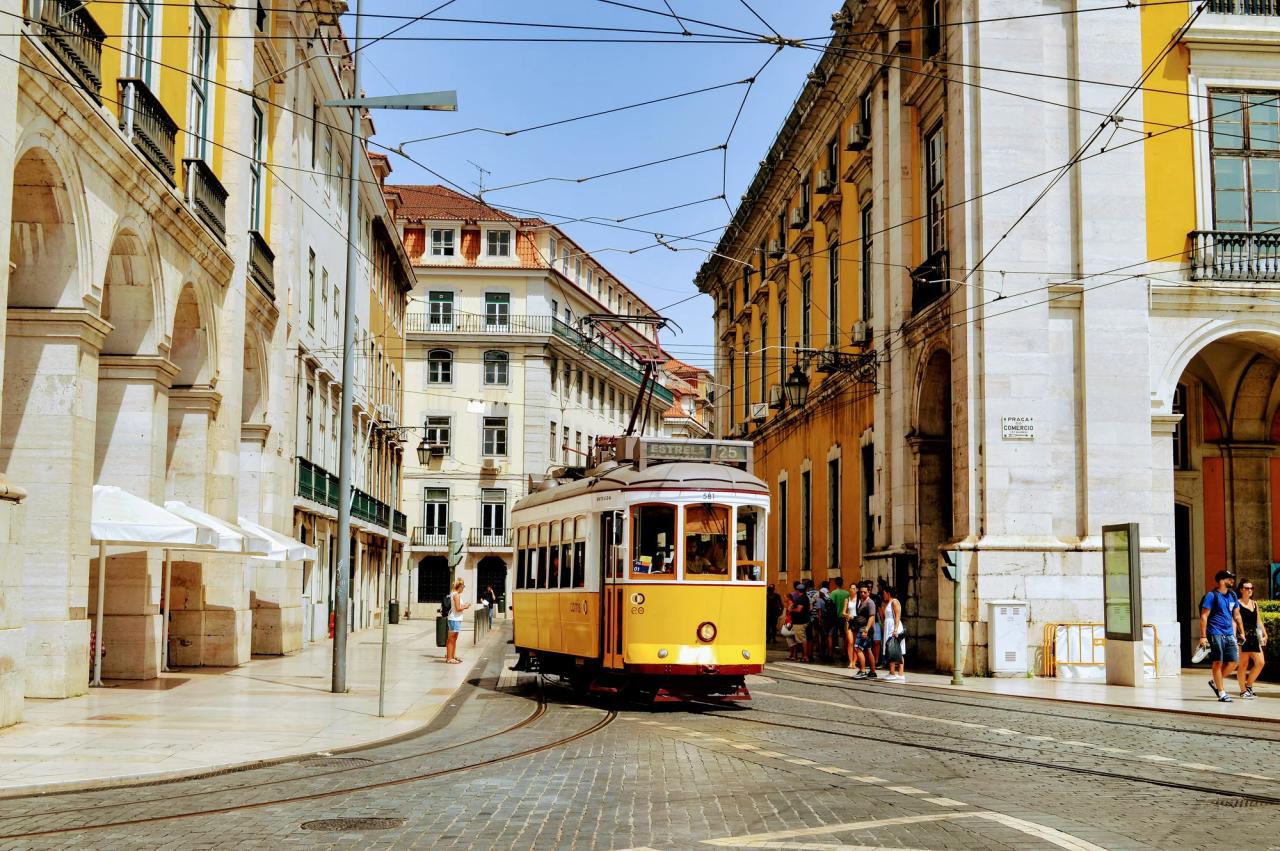

Lisbon is Portugal's sun-soaked capital, built across seven hills overlooking the Tagus River. It blends centuries of maritime history with a thriving startup scene, world-class dining, and one of Europe's mildest climates. The city attracts remote workers, retirees, and young professionals drawn by the D7 and digital nomad visas, affordable living compared to Western European capitals, and a famously welcoming culture. If you want big-city energy without the sky-high prices of London or Paris, Lisbon delivers — though costs have risen sharply since 2020.
Lisbon at a Glance

- Population
- ~576,000 (city), ~3.0 million (metro area)
- Region
- Lisboa district, Lisbon region
- Known For
- Tram 28, pastéis de nata, fado music, Alfama
- Average Rent (1BR)
- €900–€1,400 (city center)
- Average Salary
- €1,100–€1,600 net/month
- Expat Community
- Large and growing — significant British, Brazilian, American, French, and digital nomad communities
Why Move to Lisbon
- Climate: Over 2,800 hours of sunshine per year, mild winters rarely dropping below 10°C, and warm dry summers make Lisbon one of the sunniest capitals in Europe.
- Safety: Portugal consistently ranks among the top 10 safest countries globally, and Lisbon has low violent crime rates for a capital city.
- English proficiency: Most people under 40 speak conversational English, making day-to-day life manageable while you learn Portuguese.
- Startup ecosystem: Lisbon hosts Web Summit, dozens of incubators, and a growing tech scene backed by companies like Google, Amazon, and Mercedes-Benz.
- Gateway location: Lisbon Airport offers direct flights across Europe, North America, South America, and Africa — ideal for frequent travellers.
- Cultural richness: From fado houses in Alfama to contemporary art at MAAT, from Jerónimos Monastery to the street art of Mouraria, Lisbon offers centuries of layered culture.
- Golden Visa and tax benefits: Portugal's NHR (Non-Habitual Resident) tax regime and Golden Visa programme have attracted thousands of high-net-worth individuals, though rules have tightened in recent years.
Finding Housing in Lisbon
Average Rents
| Neighborhood | 1-Bedroom | 3-Bedroom | Character |
|---|---|---|---|
| Alfama | €850–€1,200 | €1,800–€2,600 | Historic, narrow streets, fado houses, hilly |
| Baixa/Chiado | €1,000–€1,500 | €2,200–€3,200 | Central, walkable, tourist-heavy, shops and cafés |
| Príncipe Real | €1,100–€1,600 | €2,400–€3,400 | Trendy, LGBTQ+-friendly, gardens, upscale dining |
| Campo de Ourique | €800–€1,100 | €1,600–€2,400 | Residential, local feel, good market, family-friendly |
| Marvila/Beato | €750–€1,050 | €1,500–€2,200 | Up-and-coming, creative hub, warehouses, breweries |
| Parque das Nações | €950–€1,350 | €2,000–€2,800 | Modern, waterfront, family-oriented, Oriente station |
| Arroios | €800–€1,100 | €1,600–€2,300 | Multicultural, affordable dining, vibrant streets |
| Estrela/Santos | €900–€1,300 | €1,800–€2,600 | Leafy, calm, riverfront, growing café scene |
How to Find Housing
- Idealista.pt: The dominant rental platform in Portugal — most listings, map search, filter by price and size.
- Imovirtual: Second-largest portal, sometimes has exclusive listings not on Idealista.
- Facebook groups: "Rooms and Flats in Lisbon" and "Lisbon Expats Housing" are active but competitive.
- Uniplaces: Useful for short-term and student housing, especially in Arroios and Alvalade.
- Spotahome: Good for remote viewings and furnished rentals.
- Local tip: Viewings move fast. Have documents ready (NIF, Portuguese bank statement, proof of income) and be prepared to sign on the spot.
Tips for Expats
- Expect to pay first month's rent plus one to two months' deposit upfront.
- Many landlords prefer contracts of at least one year; short-term furnished rentals cost 20–40% more.
- Get your NIF (tax number) before signing any lease — it is mandatory for contracts.
- Check if utilities are included; most contracts list them separately.
- Beware of scams — never transfer money without viewing the property and verifying the landlord's identity.
- Rents are negotiable, especially for longer leases or off-season signings (October–February).
Neighborhoods Guide
- Alfama: Best for culture lovers and history buffs. Steep cobbled lanes, fado bars on every corner, stunning river views. Rents are moderate by central standards but climbing. Not ideal for those with mobility issues.
- Baixa/Chiado: The heart of downtown. Flat, walkable, surrounded by shops and restaurants. Great for professionals who want zero commute. Premium rents and heavy tourist foot traffic year-round.
- Príncipe Real: Upscale hilltop neighbourhood with boutique shops, rooftop bars, and the Jardim do Príncipe Real. Popular with expats, creatives, and the LGBTQ+ community. Rents are among the highest in the city.
- Campo de Ourique: A village-within-a-city feel. Families and long-term residents dominate. Excellent market hall, quiet streets, good schools nearby. One of the best value-for-money areas close to the centre.
- Marvila/Beato: Lisbon's emerging arts and craft-beer district. Former industrial spaces converted into galleries, studios, and taprooms. Rents are still reasonable but rising fast as the area gentrifies.
- Estrela/Santos: Leafy, calm, near the riverfront. Popular with young professionals and couples. Good transport links, Lapa gardens, and a growing café scene.
- Arroios: The most multicultural neighbourhood in Lisbon. Affordable dining from dozens of cuisines, vibrant street markets, and a young creative crowd. Rents are rising but still below the prime central average.
- Graça: Just above Alfama with some of the best miradouros (viewpoints) in the city. Quieter and more residential than Alfama, with a strong local community. Good value for a central location.
Cost of Living in Lisbon
Monthly Budget Breakdown
| Category | Budget Range |
|---|---|
| Rent (1BR, center) | €900–€1,400 |
| Utilities | €90–€140 |
| Internet | €30–€40 |
| Groceries | €250–€350 |
| Transport | €40 (monthly Navegante pass) |
| Dining out (4x/month) | €120–€200 |
| Leisure/Gym | €30–€60 |
| Total | €1,460–€2,230 |
Day-to-Day Costs
- Coffee (bica): €0.80–€1.20
- Lunch (casual restaurant): €8–€12
- Monthly transport pass (Navegante): €40
- Beer (half-pint, bar): €2.50–€4
- Cinema ticket: €7.50–€9
- Loaf of bread: €1.20–€1.80
- 1 litre of milk: €0.80–€1.10
- Dozen eggs: €2.20–€3.00
- FitnessFirst or Holmes Place gym: €40–€70/month
Getting Around Lisbon
- Public transport: The metro has four lines covering most central areas. Trams (including the famous 28), buses, and the Carris network fill gaps. A monthly Navegante pass costs €40 and covers all Lisbon municipal transport.
- Tram 28: The iconic yellow tram winds through Alfama, Graça, Baixa, and Estrela. It is often packed with tourists — use it early morning or late evening for a local experience.
- Cycling: Improving but hilly terrain makes it challenging. E-bike rentals (GIRA) available. Flat routes exist along the riverfront from Cais do Sodré to Belém.
- Driving: Not recommended in the centre — narrow streets, limited parking, and aggressive driving culture. Useful for weekend trips outside the city.
- Airport: Humberto Delgado Airport (LIS) is 7 km from the centre, reachable by metro (red line) in about 25 minutes. Direct flights to most European capitals, plus New York, São Paulo, and several African cities.
- Intercity: High-speed trains to Porto (2h40 via Alfa Pendular) from Gare do Oriente. Regional trains to Sintra, Setúbal, and the Alentejo coast.
- Ride-hailing: Uber and Bolt are widely available and often cheaper than taxis for cross-city trips.
Healthcare in Lisbon
- Hospitals/Clinics: Hospital de Santa Maria (largest public hospital), Hospital de São José, Hospital da Luz (private), Hospital CUF Descobertas (private). Private clinics are common and offer faster appointments.
- English-speaking doctors: Widely available in private hospitals and clinics. Public system has English-speaking staff in major hospitals but wait times can be long.
- Pharmacies: Abundant. Identified by green cross. Pharmacists can advise on minor ailments and sell many medications without prescription.
- Emergency number: 112 (pan-European emergency number).
- Health insurance: Many expats supplement public healthcare with private insurance (Multicare, Médis, Allianz) costing €30–€80/month depending on age and coverage.
Get a personalised relocation plan
Drop your email and we'll send a tailored checklist plus three quotes from vetted movers.
Culture & Lifestyle
- Fado music: Born in Alfama and Mouraria. Intimate fado houses offer live performances nightly — an essential Lisbon experience. Expect to pay €20–€40 per person including dinner.
- Café culture: Locals linger over bicas (espresso) and pastéis de nata in neighbourhood pastelarias rather than chains.
- Nightlife: Bairro Alto and Cais do Sodré (Pink Street) buzz nightly. Rooftop bars have exploded in popularity. Club scene centres around LX Factory and Alcântara.
- Outdoor life: Beaches in Cascais and Costa da Caparica are 30–40 minutes away. Surfing, hiking in Sintra-Cascais Natural Park, and riverside walks are all easy day activities.
- Art and museums: MAAT, Museu Nacional de Arte Antiga, Berardo Collection, and the tile museum (Museu Nacional do Azulejo) are standouts.
Food & Dining
- Pastéis de nata from Pastéis de Belém are iconic but every neighbourhood has its own bakery.
- Mercado da Ribeira (Time Out Market) mixes traditional vendors with gourmet stalls.
- Budget meals: look for "menu do dia" (daily lunch menu) at local tascas for €7–€10 including drink.
- Seafood is exceptional — try grilled sardines in June during Santos Populares festivals.
- Lisbon's food scene spans Portuguese classics, Cape Verdean cachupa, Brazilian churrasco, Indian, Thai, and Japanese cuisines.
- Wine is excellent value — try Alentejo reds and Vinho Verde whites, both under €5 a bottle at supermarkets.
Expat Community
- Massive digital nomad and remote worker community. Coworking spaces like Second Home, Heden, and Outsite are popular.
- Meetup groups include Lisbon Digital Nomads, InterNations Lisbon, and various language exchange nights.
- Facebook groups like "Americans & Friends PT" and "Expats in Lisbon" are highly active for advice and housing.
- The city hosts regular tech meetups, startup events, and international networking evenings.
- Sports and hobby groups (running clubs, surfing groups, board game nights) are easy to find.
Working Remotely in Lisbon
- Coworking spaces: Second Home (Mercado da Ribeira), Heden (multiple locations), Outsite (Cais do Sodré), Selina Secret Garden. Day passes from €15, monthly from €150–€300.
- Café working: Most pastelarias tolerate laptop workers during quiet hours. Bring headphones and buy regularly.
- Internet: Portugal has good fibre coverage. Average home broadband is 100–500 Mbps. Coffee shop Wi-Fi is generally reliable but not always fast.
- Digital nomad visa: Portugal offers a dedicated digital nomad visa for remote workers earning at least 4× the Portuguese minimum wage (€4,292/month gross as of 2026).
Job Market in Lisbon
- Main industries: Tourism and hospitality, tech and startups, finance, real estate, shared service centres.
- Major employers: Siemens, Cisco, Google, Amazon, Deloitte, Siemens Energy, Unbabel, Farfetch.
- Average salaries by sector:
| Sector | Average Net Monthly |
|---|---|
| Tech/IT | €1,500–€2,500 |
| Finance | €1,400–€2,200 |
| Hospitality | €850–€1,200 |
| Marketing | €1,200–€1,800 |
| Shared Services | €1,100–€1,600 |
- Job search resources: Landing.jobs (tech-focused), Net-Empregos, LinkedIn Portugal, Emprego XL.
Education in Lisbon
- International schools: St. Julian's School (Carcavelos), TASIS Portugal (Belas), Carlucci American International School (Linda-a-Velha). Fees range from €10,000–€22,000/year.
- Universities: Universidade de Lisboa (incorporating Instituto Superior Técnico), Universidade Nova de Lisboa. Tuition for EU citizens is very low (~€700–€1,000/year).
- Language schools: Portuguese for All, Lusa Language School, and Universidade de Lisboa's language centre offer courses from beginner to advanced.
- Public schools: Free for residents. Quality varies by parish — Estrela, Campo de Ourique, and Avenidas Novas have some of the best-rated public primary schools.
- Nurseries and kindergartens: Public crèches (creches) have limited spots and long waitlists. Private options cost €300–€600/month.
Moving Checklist for Lisbon
Before Arriving
- Apply for your visa (D7, digital nomad, or work visa) at the Portuguese consulate
- Obtain your NIF (tax number) — can be done remotely via a fiscal representative
- Open a Portuguese bank account (Millennium BCP, ActivoBank, or Novo Banco)
- Research neighborhoods and join Facebook housing groups
- Gather certified copies of key documents (birth certificate, degree, marriage certificate)
- Arrange health insurance (private or proof for visa application)
First Week
- Register at the local Junta de Freguesia (parish council) for residency certificate
- Get a Navegante transport card at any metro station
- Sign up for a Portuguese phone number (MEO, NOS, or Vodafone)
- Set up a health centre (centro de saúde) registration for public healthcare
- Familiarise yourself with local pharmacies and nearest hospital
- Explore your neighborhood on foot — find your nearest supermarket, bakery, and café
First Month
- Apply for your residency card at AIMA (formerly SEF)
- Explore neighborhoods before committing to a long-term lease
- Open a Portuguese SIM-only plan for cheaper data
- Register with Finanças for tax purposes if working locally
- Set up home internet (MEO, NOS, or Vodafone — check coverage in your area)
- Open a utility account with EDP (electricity) and EPAL (water)
- Start Portuguese language lessons — even basics make a huge difference
Frequently asked
Nightlife & Entertainment
- Bairro Alto: The classic nightlife district. Dozens of small bars spill onto narrow streets from 10 PM. Mixed crowd, from students to tourists.
- Cais do Sodré / Pink Street: Former red-light district turned nightlife hub. Live music, cocktail bars, and clubs.
- LX Factory: Converted industrial complex with bars, restaurants, a Sunday market, and bookshop Ler Devagar.
- Rooftops: Park Bar, TOPO Martim Moniz, and Entretanto offer cocktails with panoramic city views.
- Clubs: Lux Fragil (iconic, by the river), Ministerium (electronic music near Cais do Sodré).
- Live music: Fado houses in Alfama and Mouraria, jazz at Hot Clube de Portugal, and regular concerts at Campo Pequeno and Altice Arena.
Weather & Climate
| Season | Temperature | Conditions |
|---|---|---|
| Spring (Mar–May) | 15–23°C | Mild, occasional rain, flowers blooming |
| Summer (Jun–Sep) | 25–35°C | Hot, dry, long days, peak tourism |
| Autumn (Oct–Nov) | 15–22°C | Pleasant, increasing rain, fewer tourists |
| Winter (Dec–Feb) | 8–15°C | Cool, rainy, occasional fog, quiet season |
Language Tips
- Greetings: Olá (hello), bom dia (good morning), boa tarde (good afternoon), boa noite (good evening).
- Essentials: Obrigado/a (thank you), por favor (please), com licença (excuse me), desculpe (sorry).
- Useful: Quanto custa? (How much?), fala inglês? (Do you speak English?), a conta, por favor (the bill, please).
- Tip: Portuguese pronunciation is the hardest part. Apps like Practice Portuguese and iTalki tutors help. Locals appreciate any effort.
Related Guides
- [Moving to Portugal] — comprehensive country guide covering visas, taxes, and residency
- [Moving to Porto] — guide to Portugal's second city
- [Moving to Amadora] — affordable Lisbon suburb guide