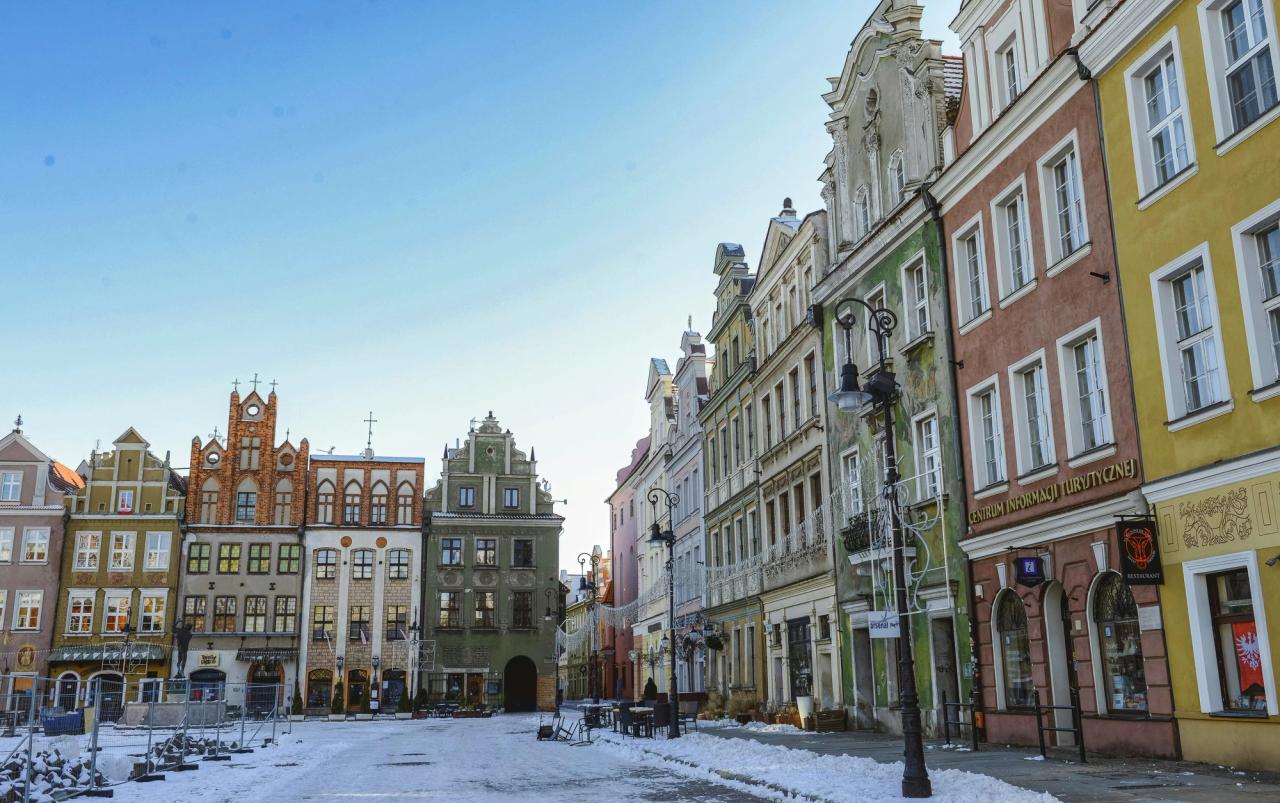
Poznań is Poland's fifth-largest city and the capital of the Wielkopolska (Greater Poland) region — widely considered the cradle of the Polish state, where the Baptism of Poland in 966 took place on Ostrów Tumski, the cathedral island that still stands at the city's heart. Today, Poznań is one of the country's most dynamic business hubs, consistently posting one of the lowest unemployment rates in Poland (around 1.5-2%). It hosts the Międzynarodowe Targi Poznańskie (MTP), Poland's largest trade fair complex, which draws international exhibitors and professionals year-round. For expats, Poznań offers a pragmatic balance: strong career opportunities in a city that is large enough to matter but compact enough to feel livable, with an Old Market Square (Stary Rynek) where mechanical billy goats (koziołki) butt heads at noon from the town hall tower — a tradition known across all of Poland.
Poznań at a Glance
- Population
- ~536,000 (metro area ~1.03 million)
- Region
- Wielkopolska (Greater Poland), western Poland
- Known For
- Trade fairs (MTP), Stary Rynek with koziołki, rogale świętomarcińskie, one of Poland's strongest economies
- Average Rent (1BR)
- 2,200–3,500 PLN
- Average Salary
- ~7,100 PLN net/month
- Expat Community
- Growing, concentrated around IT, shared services, and trade fair industries; active international meetups
Why Move to Poznań
- Strong job market: Poznań regularly ranks among Polish cities with the lowest unemployment. Major sectors include IT, Business Process Outsourcing (BPO), manufacturing, logistics, and food processing. The Kombinat area and surrounding industrial zone host large employers.
- Affordable for a business hub: Rents and daily costs sit noticeably below Warsaw and Kraków, while salaries remain competitive, especially in tech and finance.
- Excellent connectivity: Poznań sits roughly halfway between Warsaw and Berlin on the E30 rail corridor — under 3 hours to either capital by train. Poznań-Ławica Airport (POZ) offers direct flights across Europe.
- Green and compact: Lake Malta (Jezioro Maltańskie), the Warta riverfront, and numerous parks make the city unusually green for its size. The PST (Poznański Szybki Tramwaj), a fast tram system with dedicated tracks, crosses the city efficiently.
- Strong academic base: With UAM (Adam Mickiewicz University) and PP (Poznań University of Technology), the city produces a steady pipeline of graduates, which feeds the local tech and engineering job market and keeps the city feeling young.
- Food culture with regional identity: Poznań has its own culinary traditions distinct from the rest of Poland — rogale świętomarcińskie, pyry z gzikiem, and a surprising depth of Vietnamese restaurants reflecting the city's multicultural character.
Visas and Residency
If you are an EU/EEA/Swiss citizen, you can live and work in Poznań freely — you need only register your stay if remaining longer than 90 days.
Non-EU nationals typically arrive on one of the following:
- National visa (Type D): Issued for work, study, or family reunification. Usually valid for up to one year. Your employer typically initiates the work permit process before you apply.
- Temporary residence permit (Karta Pobytu): Applied for at the Urząd Wojewódzki (Voivodeship Office) in Poznań at plac Wolności 17. Processing can take 2-6 months. You will receive a PESEL number (unique national ID number) as part of the process.
- EU Blue Card: Available for highly qualified non-EU workers with a salary threshold set annually by the government.
- Zameldowanie: This is your official address registration, done at the Urząd Miasta (City Office). EU citizens and long-term residents must complete it within 30 days of moving to a new address. It is separate from your residence permit and is required for many administrative tasks.
Finding Housing in Poznań
Average Rents
| Neighborhood | 1-Bedroom | 3-Bedroom | Character |
|---|---|---|---|
| Jeżyce | 2,400–3,300 PLN | 4,000–5,500 PLN | Hip, artsy, popular with young professionals; great cafés and pre-war architecture |
| Winogrady | 2,200–3,000 PLN | 3,800–5,200 PLN | Quiet residential, lots of panel-block housing (bloki) alongside newer builds; close to green areas |
| Łazarz | 2,300–3,200 PLN | 3,900–5,400 PLN | Central, walkable, mix of tenements and modern apartments; strong café scene |
| Wilda | 2,000–2,800 PLN | 3,500–4,800 PLN | Affordable, working-class roots gentrifying fast; good transport links to center |
| Naramowice | 2,000–2,700 PLN | 3,400–4,600 PLN | Northern residential area, modern developer-built estates popular with families |
| Stare Miasto (Old Town) | 3,000–4,500 PLN | 5,000–7,500 PLN | Tourist and prestige zone; renovated tenements, limited parking, premium pricing |
How to Find Housing
- OLX.pl: The dominant classifieds platform in Poland. Most landlords and agencies post here. Filter by neighborhood and price.
- Otodom.pl: Higher-quality listings, often from agencies. Better photos and more detailed descriptions.
- Nieruchomosci-online.pl: Useful for comparing prices and finding developments still under construction (developer state — "stan deweloperski").
- Facebook groups: Search for "Mieszkania Poznań" or "Poznań apartments expats" — direct from landlords, but verify carefully.
Tips for Expats
- Landlords often require one month's rent as a deposit and may ask for proof of income or an employment contract.
- Make sure your lease is registered — you will need it for zameldowanie at the Urząd Miasta.
- "Stan deweloperski" means bare-shell (no flooring, no painted walls). "Stan pod klucz" means turnkey. Check which you are getting before signing.
- Expect to pay extra for a parking space in newer buildings (200–400 PLN/month).
- Most viewings and negotiations are in Polish. If your Polish is limited, bring a local colleague or hire a relocation agent.
Cost of Living in Poznań
Monthly Budget Breakdown
| Category | Budget Range |
|---|---|
| Rent (1BR, center) | 2,500–3,500 PLN |
| Utilities (electricity, heating, water, garbage) | 600–900 PLN |
| Internet | 50–80 PLN |
| Groceries | 1,000–1,500 PLN |
| Transport (monthly pass) | 98 PLN |
| Dining out (4x/month) | 300–500 PLN |
| Leisure/Gym | 150–300 PLN |
| Total (single person) | 4,698–6,878 PLN |
Day-to-Day Costs
- Coffee: 12–18 PLN
- Lunch at a milk bar (bar mleczny): 20–35 PLN
- Monthly transport pass (bilet miesięczny): 98 PLN (Zone A, city area)
- Beer at a bar: 12–18 PLN
- Cinema ticket: 25–35 PLN
- Rogal świętomarciński (St. Martin's croissant): 8–12 PLN
Banking
To open a bank account in Poznań, you will need your PESEL number and a valid ID or passport. Major banks with English-language online banking include:
- mBank: Popular with younger residents, decent app, English interface.
- ING Bank Śląski: Reliable, English online banking, widespread ATMs.
- Santander Bank Polska: International parent company, English support.
- PKO BP: Poland's largest bank — extensive branch network but less English-friendly online.
For daily payments, BLIK is the dominant Polish instant-payment system. It lets you send money, pay in shops, and withdraw cash from ATMs using a 6-digit code generated in your banking app. Most expats adopt it within days of arriving. Card payments (contactless) are accepted almost everywhere, but some small shops and market stalls are cash-only.
Get a personalised relocation plan
Drop your email and we'll send a tailored checklist plus three quotes from vetted movers.
Healthcare in Poznań
Public Healthcare
Poland's public health system is called NFZ (Narodowy Fundusz Zdrowia).
- Quality: NFZ care in Poznań is functional but involves long wait times for specialists (weeks to months). Public dental care is very limited.
- Registration: Choose a primary care physician (lekarz pierwszego kontaktu) at an NFZ-funded clinic. You can change once per year.
- Emergency: Dial 112 for all emergencies. Hospital emergency departments (SOR — Szpitalny Oddział Ratunkowy) are open 24/7. The main hospital serving central Poznań is Szpital Kliniczny im. H. Święcickiego on Przybyszewskiego street.
- Pharmacies: Apteka locations are widespread across all neighborhoods. Many are open late, and some operate 24 hours. The Super-Pharm chain has English-speaking staff at several locations.
Private Healthcare
Most expats in Poznań use private clinics for speed and English-speaking staff.
- Lux Med: Large network, online booking, English-speaking doctors available.
- Medicover: Similar to Lux Med, popular with corporate employees.
- Enel-Med: Mid-range pricing, decent specialist coverage.
Getting Around Poznań
- Public transport: Operated by ZTM Poznań. The system includes trams (regular and the PST fast tram on dedicated tracks), buses, and the Poznań Fast Tram line that connects the northern suburbs through the center. A monthly Zone A pass costs 98 PLN. Tickets can be bought via the IKOL app or at kiosks.
- Cycling: Poznań has a growing bike-lane network, particularly along the Warta river and around Lake Malta. The Nextbike bike-sharing system operates across the city.
- Driving: Parking in the center is managed by the Parking Zone (Strefa Parkowania) — paid Monday–Friday, 8:00–17:00. Traffic can be heavy during rush hour on routes heading to Kombinat and the western industrial areas.
- Airport: Poznań-Ławica Airport (POZ) is just 7 km west of the center — one of the closest city-center airports in Poland. Direct flights include Frankfurt, Munich, London, Copenhagen, and seasonal routes across southern Europe.
- Intercity: Poznań Główny station is on the main Berlin–Warsaw rail line. Berlin is ~2h50m by express train, Warsaw ~2h50m, Wrocław ~2h. FlixBus and PKS bus connections are also available.
Education in Poznań
International Schools
- International School of Poznań (ISO): Offers IB programmes, English-language instruction, popular with expat families.
- Poznań British International School: British curriculum, located in the western part of the city.
- Da Vinci Schools: Bilingual Polish-English education, from preschool through secondary.
Universities
- Adam Mickiewicz University (UAM): One of Poland's top universities, strong in humanities and sciences. Main campus at Fredry Street near the center.
- Poznań University of Technology (PP): Highly regarded engineering and technology school with strong industry partnerships.
- University of Economics (UEP): Business and economics programs, popular with Erasmus students.
- University of Medical Sciences (UMP): English-language medical programme available, attracting international students.
Language Schools
- School of Polish for Foreigners at UAM: Academic-year and intensive summer courses.
- KLUB DIALOGU: Private language school offering group and individual Polish lessons.
- Berlitz and Speak Up: English-language schools also offering Polish courses for expats.
Job Market in Poznań
- Main industries: IT and software, BPO/Shared Services Centers (SSC), manufacturing (Volkswagen has a major plant in Poznań), logistics, food processing, and trade fair services.
- Major employers: Volkswagen Poznań, GlaxoSmithKline, Roche, Nationale-Nederlanden, many SSCs run by global firms, plus a dense ecosystem of Polish tech companies.
- Average salaries by sector:
| Sector | Net Monthly Salary Range |
|---|---|
| IT (mid-level developer) | 8,000–15,000 PLN |
| BPO/SSC (specialist) | 5,000–9,000 PLN |
| Engineering | 6,000–11,000 PLN |
| Teaching (international school) | 6,000–10,000 PLN |
| General admin/support | 3,500–5,500 PLN |
- Job search platforms: Pracuj.pl (largest job board in Poland), LinkedIn (essential for IT and corporate roles), RocketJobs.pl (marketing, IT, finance), and Glassdoor for company reviews. Many BPO/SSC roles are posted in English.
Culture and Lifestyle
- Stary Rynek (Old Market Square): The social heart of Poznań. Every day at noon, two mechanical billy goats (koziołki) emerge from the town hall clock tower and butt heads 12 times. It draws a crowd daily. The square is lined with colorful merchant houses (domki budnicze), restaurants, and bars.
- Ostrów Tumski: The island between the Cybina and Warta rivers where Poland's first cathedral was built. The Archcathedral Basilica of St. Peter and St. Paul stands here — it is considered the birthplace of Polish Christianity.
- Lake Malta (Jezioro Maltańskie): A large artificial lake east of the center with a year-round ski slope (Malta Ski), a thermal baths complex (Termy Maltańskie), a zoo, and extensive running and cycling paths.
- Rogale świętomarcińskie: Poznań's signature pastry — St. Martin's croissants filled with white poppy seed, nuts, and raisins, certified with a protected geographical indication. They are baked in enormous quantities every 11 November for St. Martin's Day, but bakeries sell them year-round.
- Lech Poznań: The city's football club, playing at INEA Stadion. Match days bring a passionate atmosphere, particularly against local rivals. The club's fan base is known for the "Poznań celebration" — turning backs to the pitch and bouncing — adopted by fans worldwide.
Food and Dining
- Local specialties: Beyond rogale, try pyry z gzikiem (baked potatoes with cottage cheese and herbs) — the signature Poznań dish. Kaczka po poznańsku (Poznań-style duck with dumplings) is another classic.
- Best areas for dining: Stary Rynek and ulica Paderewskiego for upscale restaurants; Jeżyce (ulica Święty Marcin and surroundings) for casual bistros, cafés, and cocktail bars; Łazarz for Vietnamese and Middle Eastern restaurants — Poznań has one of Poland's best Vietnamese food scenes.
- Budget options: Bar mleczny (milk bar) is a traditional Polish cafeteria serving cheap, hearty meals. Bar Pod Fredra near the center and Bar Mleczny Słoneczny are reliable choices. Expect to pay 20–35 PLN for a full meal.
Expat Community
- Meetup groups: Search Meetup.com for "Poznań expats," "Poznań international," and language-exchange events. Regular gatherings happen around Jeżyce and the center.
- International organizations: The Poznań International Fair (MTP) community naturally brings in international professionals. InterNations Poznań organizes monthly events.
- Language exchanges: Tandem language meetups (Polish-English, Polish-German) run regularly at cafés in Jeżyce and Łazarz.
- Sports and recreation: Beyond football at INEA Stadion, Lake Malta hosts rowing competitions and has a year-round ski slope. The Warta river offers kayaking in warmer months. Climbing walls and crossfit gyms have multiplied across Jeżyce and Naramowice in recent years.
- Annual events: St. Martin's Day (11 November) is Poznań's biggest street celebration, with a parade through Święty Marcin street and free rogale distributed across the city. The Malta Festival (theatre and performing arts) and Made in Poznań design fair draw international crowds each year.
Moving Checklist for Poznań
Before Arriving
- [ ] Confirm your visa or residence permit requirements based on your nationality
- [ ] Book temporary accommodation for your first 2-4 weeks (hotel or short-term apartment via Booking.com or Airbnb)
- [ ] Gather and apostille/legalize your documents: birth certificate, marriage certificate (if applicable), university diplomas
- [ ] Request an EHIC card if you are an EU citizen
- [ ] Set up international banking or ensure your card works in Poland; download a currency-transfer app (Wise, Revolut)
- [ ] Research neighborhoods and set up alerts on OLX.pl and Otodom.pl
- [ ] Learn basic Polish phrases — English is common in IT/corporate roles but less so in administration and housing
First Week
- [ ] Register at the Urząd Miasta (City Office) for zameldowanie — bring your lease contract, passport, and visa/residence permit
- [ ] Apply for a PESEL number at the Urząd Skarbowy (Tax Office) if you do not already have one — you need it for banking, employment, and healthcare
- [ ] Open a Polish bank account (mBank, ING, or Santander) — bring PESEL, passport, and proof of address
- [ ] Activate BLIK in your banking app
- [ ] Get a local SIM card (Orange, Play, Plus, or T-Mobile — prepaid plans start at 30 PLN/month)
- [ ] Buy a ZTM public transport pass — use the IKOL app or visit a ZTM customer service point
First Month
- [ ] Register with ZUS through your employer to activate NFZ public health coverage
- [ ] Choose a primary care doctor (lekarz pierwszego kontaktu) — either NFZ-funded or at a private clinic like Lux Med or Medicover
- [ ] Find long-term housing — sign a registered lease and update your zameldowanie if your address changes
- [ ] Enroll children in school — contact the Kuratorium Oświaty (Regional Education Authority) or your chosen international school
- [ ] Set up utilities if not included in rent: electricity (Enea), gas (PGNiG), internet (multiple providers — Orange, UPC/Play, local fiber operators)
- [ ] Explore the city — walk Stary Rynek, visit Ostrów Tumski, run or cycle around Lake Malta, and try pyry z gzikiem at a local restaurant
- [ ] Register your foreign vehicle if you brought one — at the Wydział Komunikacji within 30 days
- [ ] Sign up for a Polish language course — the School of Polish for Foreigners at UAM or KLUB DIALOGU both offer beginner-friendly options
- [ ] Join an expat community group (InterNations Poznań, Meetup, or Facebook) to build your local network early
Related Guides
- Moving to Poland — comprehensive country guide with visa details, tax overview, and national cost-of-living data
- Moving to Warsaw — comparison with Poland's capital, 2h50m east by train
- Moving to Wrocław — another western Polish city, 2h south, popular with expats