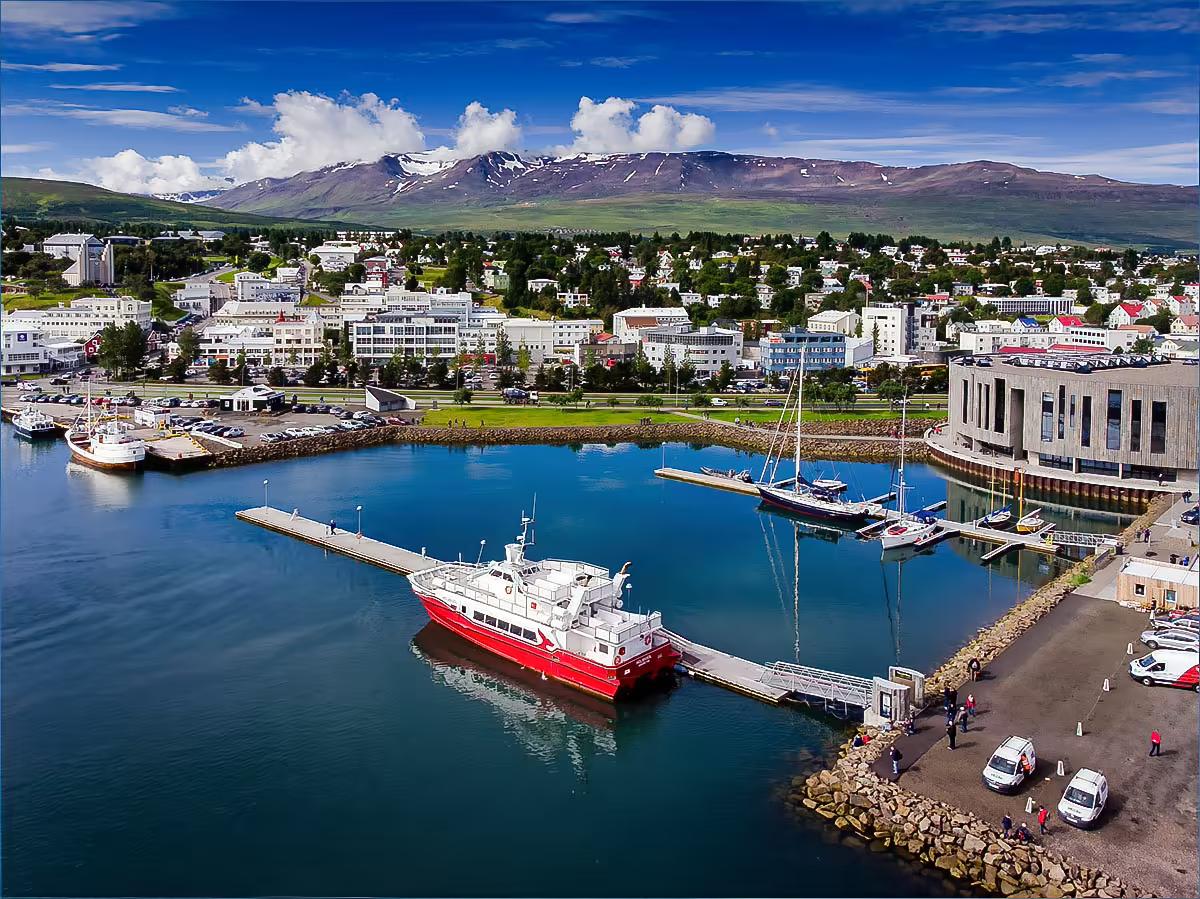
Akureyri is the largest town in northern Iceland and proudly calls itself the "Capital of the North." Set at the head of Eyjafjörður — Iceland's longest fjord — it is a town of about 20,000 people with the services and culture of a much larger place. A university, a hospital, a busy harbor, a ski area within city limits, and one of the best locations in the country for whale watching all pack into a compact, colorful center. Winters are colder and snowier than in Reykjavik, but also calmer and sunnier thanks to the surrounding mountains. If you want Icelandic life without the capital's price tag and tourist congestion, Akureyri is the strongest alternative.
Akureyri at a Glance
- Population
- 20,050
- Region
- Northeastern Region (Norðurland eystra)
- Known For
- Whale watching, ski area, "Capital of the North," Eyjafjörður fjord
- Average Rent (1BR)
- ISK 150,000–220,000/month
- Average Salary
- ISK 420,000–500,000/month (net)
- Expat Community
- Smaller but tight-knit — drawn by nature and lower costs
- Primary Language
- Icelandic (English understood, but less prevalent than Reykjavik)
- Climate
- Subarctic — cold snowy winters, mild summers, drier and sunnier than Reykjavik
Why Move to Akureyri
- Significantly lower cost of living: Rent is 30–40% cheaper than Reykjavik. Everyday expenses like dining and groceries are also lower.
- World-class nature access: Whale watching in Eyjafjörður, the Húsavík whale museum nearby, Goðafoss waterfall 30 minutes away, and Lake Mývatn an hour's drive — northern Iceland's greatest hits are all close.
- Ski area in town: Hlíðarfjall ski resort sits on the hillside above Akureyri and is reachable in minutes. The season runs from late November through April. Affordable passes and uncrowded slopes.
- Compact and community-driven: You can walk across the town center in 15 minutes. People know each other. There is a warmth and pace of life that larger towns struggle to match.
- Less tourist pressure: Akureyri sees far fewer tourists than Reykjavik. Daily life feels more authentically Icelandic.
Finding Housing in Akureyri
Akureyri's rental market is smaller but tighter than its population might suggest. Summer tourism drives short-term rental demand, reducing the year-round supply. Most rentals are unfurnished detached houses or apartments in low-rise buildings. The town center is walkable, so location matters less here than in a large city — almost everything is within 15 minutes on foot.
Average Rents
| Neighborhood | 1-Bedroom | 3-Bedroom | Character |
|---|---|---|---|
| Akureyri Center | ISK 170,000–240,000 | ISK 300,000–400,000 | Walkable, older buildings, near harbor |
| Brekkan | ISK 150,000–210,000 | ISK 270,000–360,000 | Hillside, views, mixed housing |
| Glerárholt | ISK 140,000–200,000 | ISK 250,000–340,000 | Residential, newer, family-friendly |
| Þingvallastræti area | ISK 160,000–230,000 | ISK 290,000–380,000 | Central, near schools |
| Oddeyrarholt | ISK 145,000–200,000 | ISK 260,000–350,000 | Quieter, near Glerá river |
| Svalbarðseyri (nearby) | ISK 120,000–170,000 | ISK 220,000–300,000 | Rural, 10 min south, larger plots |
How to Find Housing
- Mbl.is classifieds: The primary source for rental listings in Akureyri.
- Leigulistinn / Rental.is: Filter by Akureyri for local options.
- Facebook groups: "Leiga á Akureyri" and local community groups post rentals. The community is small enough that asking around often works faster than searching online.
- Local tips: Akureyri has a tighter rental market than you might expect for a town its size — summer tourism drives short-term rental demand. Lock in a lease before the tourist season (June–August) if possible. Contact the Akureyri municipality housing office for assistance.
Tips for Expats
- Many Akureyri rentals include garage or parking space — essential in winter when snow piles up.
- Furnished rentals are rarer than in Reykjavik. Budget for secondhand furniture via Bland.is or local Facebook buy/sell groups.
- Heating costs are higher than in the Capital Region because Akureyri relies more on electricity than geothermal hot water.
- Snow tires are mandatory from November through April. Factor this into any car budget — a set costs ISK 80,000–150,000.
- Start your housing search early. There is less supply than you might expect.
Neighborhoods Guide
- Akureyri Center: The heart of town around Ráðhústorg (town square). Cafés, restaurants, the church (Akureyrarkirkja), and the Botanical Garden are all here. Apartments are older but central. Walkable and social.
- Brekkan: The hillside above the center. Houses and apartments with excellent views over the fjord. Steep streets but stunning scenery. Popular with those who want the view and don't mind the climb.
- Glerárholt: A newer residential area north of the Glerá river. Modern homes, playgrounds, and proximity to schools make it popular with families. The most family-oriented district.
- Þingvallastræti area: Central residential streets near the secondary school. A mix of older homes and small apartment buildings. Quiet but walkable. A good middle ground.
- Oddeyrarholt: East of the town center, near the industrial and harbor area. More affordable rents. Practical for workers in fishing and logistics. Less scenic but functional.
- Svalbarðseyri (nearby): A small village 10 minutes south of Akureyri. Rural charm, lower rents, and larger properties. Some expats prefer it for the space and quiet. A car is essential here.
Cost of Living in Akureyri
Akureyri is noticeably cheaper than Reykjavik, particularly for rent. Dining out is more affordable, and groceries are comparable or slightly cheaper. The main cost difference comes from housing. Utilities can be higher due to electric heating rather than geothermal, but the total monthly spend is still well below the capital.
Monthly Budget Breakdown
| Category | Budget Range |
|---|---|
| Rent (1BR, center) | ISK 170,000–230,000 |
| Utilities (electricity, water, waste) | ISK 18,000–28,000 |
| Internet (fiber) | ISK 6,000–8,000 |
| Groceries | ISK 50,000–75,000 |
| Transport (car or limited bus) | ISK 5,000–12,000 |
| Dining out (4x/month) | ISK 20,000–38,000 |
| Leisure/Gym membership | ISK 6,000–10,000 |
| Mobile phone plan | ISK 3,000–5,000 |
| Total | ISK 278,000–406,000 |
Day-to-Day Costs
- Coffee (flat white): ISK 500–700
- Lunch (casual restaurant): ISK 2,000–2,800
- Monthly transport pass (limited): ISK 5,000
- Beer (bar): ISK 900–1,500
- Cinema ticket: ISK 1,700–2,100
- Loaf of bread: ISK 450–620
- 1L milk: ISK 165–200
Getting Around Akureyri
- Public transport: A small bus system (Strætó Route 78 and local routes) runs limited services. Most residents drive or walk. The town is compact enough that a car is mainly needed for errands and out-of-town trips. Do not rely on buses alone.
- Cycling: Flat along the waterfront, hilly inland. Akureyri has painted heart-shaped red traffic lights — a charming touch unique to the town. Cycling is viable in summer but impractical in winter due to snow and ice.
- Driving: Roads are well maintained and plowed, but winter driving requires snow tires and confidence with icy conditions. Parking is free and plentiful everywhere. Roundabouts follow the same inner-lane-priority rules as the rest of Iceland.
- Airport: Akureyri Airport (AEY) has daily flights to Reykjavik (45 minutes) and seasonal connections to Greenland and Europe. Air Iceland Connect and Icelandair operate the route. Flights cost ISK 12,000–25,000 one way.
- Intercity: Strætó runs buses to Reykjavik (about 6 hours) and other northern towns. Service is limited — a car is strongly recommended for regional travel. The Ring Road (Route 1) passes through town.
- Taxis: Available but limited. Book in advance for airport runs or late-night trips.
Healthcare in Akureyri
- Hospitals/Clinics: Akureyri Hospital (Sjúkrahúsið á Akureyri) is the main hospital for northern Iceland. It provides emergency care, surgery, maternity, pediatrics, and specialist services. It is the second-largest hospital in the country and handles most cases without requiring transfer to Reykjavik.
- English-speaking doctors: Widely available. The hospital and local clinics serve an international patient base, including seasonal tourism workers. Language is rarely a barrier.
- Pharmacies: Several in the town center. Most open weekdays 9:00–18:00.
- Dental care: Private clinics available locally. Not covered by public insurance for adults.
- Emergency number: 112
Get a personalised relocation plan
Drop your email and we'll send a tailored checklist plus three quotes from vetted movers.
Culture & Lifestyle
- Whale watching: Eyjafjörður is one of the best whale-watching locations in Iceland. Humpback whales, dolphins, and occasionally orcas are regularly spotted from boat tours departing Akureyri harbor from April through October. Tours cost ISK 9,000–13,000 per person.
- Hlíðarfjall Ski Area: Just above town, Hlíðarfjall offers downhill skiing, snowboarding, and cross-country trails. It is affordable, uncrowded, and has lights for evening skiing. Season passes are a fraction of Alpine resort prices.
- Akureyrarkirkja: The iconic hilltop church designed by Guðjón Samúelsson (who also designed Hallgrímskirkja in Reykjavik). The interior features a stunning stained-glass window salvaged from the old Coventry Cathedral in England. Free to visit.
- Botanical Garden (Lystigarðurinn): The world's northernmost botanical garden. Free to enter, open in summer (June–September), and home to over 7,000 plant species. A peaceful retreat on long summer evenings.
- Heart-shaped traffic lights: Akureyri's traffic lights display red hearts when stopped — a quirky detail that has become an icon of the town.
- Northern Lights: The north of Iceland has less cloud cover than the south, making Akureyri one of the best places in the country for aurora viewing from September through March.
Food & Dining
- Strikið and Rub23 are Akureyri's top restaurants, serving Icelandic seafood and international cuisine. Expect ISK 4,000–7,000 for a main course.
- Bautinn is a beloved local diner with affordable meals. Bakaríið Björnin bakery is a must for pastries, bread, and a warm drink on a cold day.
- Grocery stores include Bónus, Nettó, and Kjörbudin. Prices are slightly lower than in the Capital Region. Stock up before heading into the countryside.
- Local fish is superb — the harbor sells fresh catch, and many restaurants feature daily specials from Eyjafjörður.
Expat Community
- The expat community in Akureyri is small but active — mostly European professionals, international academics, and outdoor enthusiasts. Everyone knows everyone.
- The University of Akureyri brings in visiting scholars and international students, adding diversity to the town's social fabric.
- Social life revolves around sports clubs, the swimming pool, and local festivals. Integration happens faster in a small town — join a club or volunteer and you will quickly find your people.
- English-language book clubs and international dinner groups exist but are informal.
Job Market in Akureyri
- Main industries: Fishing and seafood processing, tourism, healthcare, education, retail services.
- Major employers: Akureyri Hospital, University of Akureyri, local fishing companies, Samherji (one of Iceland's largest fishing conglomerates), tourism operators, municipal government.
- Average salaries by sector:
| Sector | Average Monthly Net (ISK) |
|---|---|
| Fishing / Seafood | 420,000–550,000 |
| Healthcare | 430,000–570,000 |
| Education | 400,000–500,000 |
| Tourism / Hospitality | 350,000–450,000 |
| Public sector | 400,000–510,000 |
| Retail / Service | 350,000–430,000 |
- Job search resources: Vinnumálastofnun, Tvinna.is, local job boards at Akureyri municipality website. Seasonal tourism work is abundant in summer — guiding, hospitality, whale watching operations. Speaking some Icelandic significantly improves prospects outside tourism.
Education in Akureyri
- International schools: No dedicated international school, but Akureyri schools offer support for non-Icelandic-speaking students. The town is small enough that schools are accustomed to integrating international children.
- Universities: University of Akureyri offers undergraduate and graduate programs in health sciences, education, business, law, and natural sciences. It is a growing institution with increasing international enrollment and exchange partnerships.
- Language schools: Icelandic courses are occasionally offered through the university or local community education programs. For intensive courses, Reykjavik-based online programs are an option.
- Preschools: Public kindergartens are available and subsidized. Apply through the Akureyri municipality. The small-town setting means shorter waitlists than in the Capital Region.
Moving Checklist for Akureyri
- Confirm residence permit or EU/EEA status
- Secure housing — rental market is tighter than its size suggests
- Arrange snow tires if you plan to bring or buy a car (mandatory November–April)
- Research job prospects in your field — the market is smaller than Reykjavik
- Register your address with Registers Iceland
- Open an Icelandic bank account (Landsbankinn and Íslandsbanki have branches in Akureyri)
- Enroll at the Akureyri health center (Heilsugæsla)
- Buy groceries and winter gear if needed
- Explore Hlíðarfjall ski area or the local swimming pool (Sundlaug Akureyrar)
- Visit the Botanical Garden and harbor
- Join a local sports club or community group to start building a social network
- Take a whale-watching tour from the harbor if in season
Visa and Residency
- EEA/Schengen nationals: No visa required. You may stay up to 3 months without registering, but must register with Registers Iceland if staying longer. After registration, you receive a residence permit card.
- Non-EEA nationals: Apply for a residence permit through the Directorate of Immigration (Útlendingastofnun). Categories include work permits, family reunification, and student permits. Processing times range from 2 to 6 months.
- Work permits: Require a job offer from an Icelandic employer. The employer must demonstrate that no suitable EEA candidate was available. Permits are tied to the specific employer and role.
- Permanent residency: Available after 4 years of continuous legal residence on a qualifying permit. Requires basic Icelandic language proficiency and a clean record.
- Citizenship: After 7 years of residence (or 4 years for Nordic citizens), you may apply for Icelandic citizenship. Dual citizenship has been permitted since 2020.
Taxes and Pensions
- Iceland uses a progressive tax system combining municipal and national taxes. The effective rate for most earners is 35–45%.
- Municipal tax in Akureyri is approximately 14.44%, consistent with other Icelandic municipalities.
- Pension contributions are mandatory. Employees contribute 4% and employers contribute 11.5% of gross salary. This is deducted automatically.
- Double taxation treaties exist with most Western countries, preventing you from being taxed twice on the same income.
- Tax returns are filed annually through the Ríkisskattstjóri website. Most returns are pre-filled and can be confirmed online.
Moving with Pets to Akureyri
Bringing pets to Iceland is strictly regulated. Dogs and cats must:
- Have an ISO-compliant microchip
- Be vaccinated against rabies (at least 30 days before travel)
- Have a valid veterinary health certificate issued within 10 days of travel
- Undergo 2–4 weeks of quarantine at an approved facility upon arrival
- Enter via approved routes only
Quarantine slots are limited — book months in advance through MAST. Costs run ISK 150,000–250,000. There is no quarantine facility in Akureyri itself — animals are quarantined near Reykjavik.
Importing a Vehicle
If you bring a car to Iceland:
- It must be declared at customs upon arrival
- Import duty ranges from 10–45% depending on vehicle value and emissions
- Vehicles must pass a technical inspection before registration
- EEA driving licences can be exchanged for Icelandic licences without a test
- Non-EEA licence holders may need to take a driving test after 12 months
- Consider importing a car suited to northern Iceland's harsh winter conditions
Related Guides
- [Moving to Iceland] — comprehensive country guide
- [Moving to Reykjavik] — capital city guide
- [Moving to Hafnarfjörður] — nearby town guide
- [Moving to Kópavogur] — Capital Region city guide